Starting your first pottery class is exciting, but for many beginners it also comes with uncertainty. People worry they will do everything wrong, make a mess, fail at the wheel, or end up being the least talented person in the room. The good news is simple: that is exactly what beginner classes are for. You are not expected to arrive with skill. You are expected to arrive with curiosity.
If you are preparing for a first pottery class in Hanoi, it helps to know what the experience usually feels like. The more realistic your expectations are, the more relaxed and enjoyable the session becomes.
What Happens Before the Making Starts
You get introduced to the studio
Most beginner pottery classes begin with a short orientation. The instructor explains the materials, tools, how the session will flow, and what kind of result is realistic for first-timers. This is useful because it resets expectations immediately. Pottery is a craft, not a five-minute trick.
You see a demonstration first
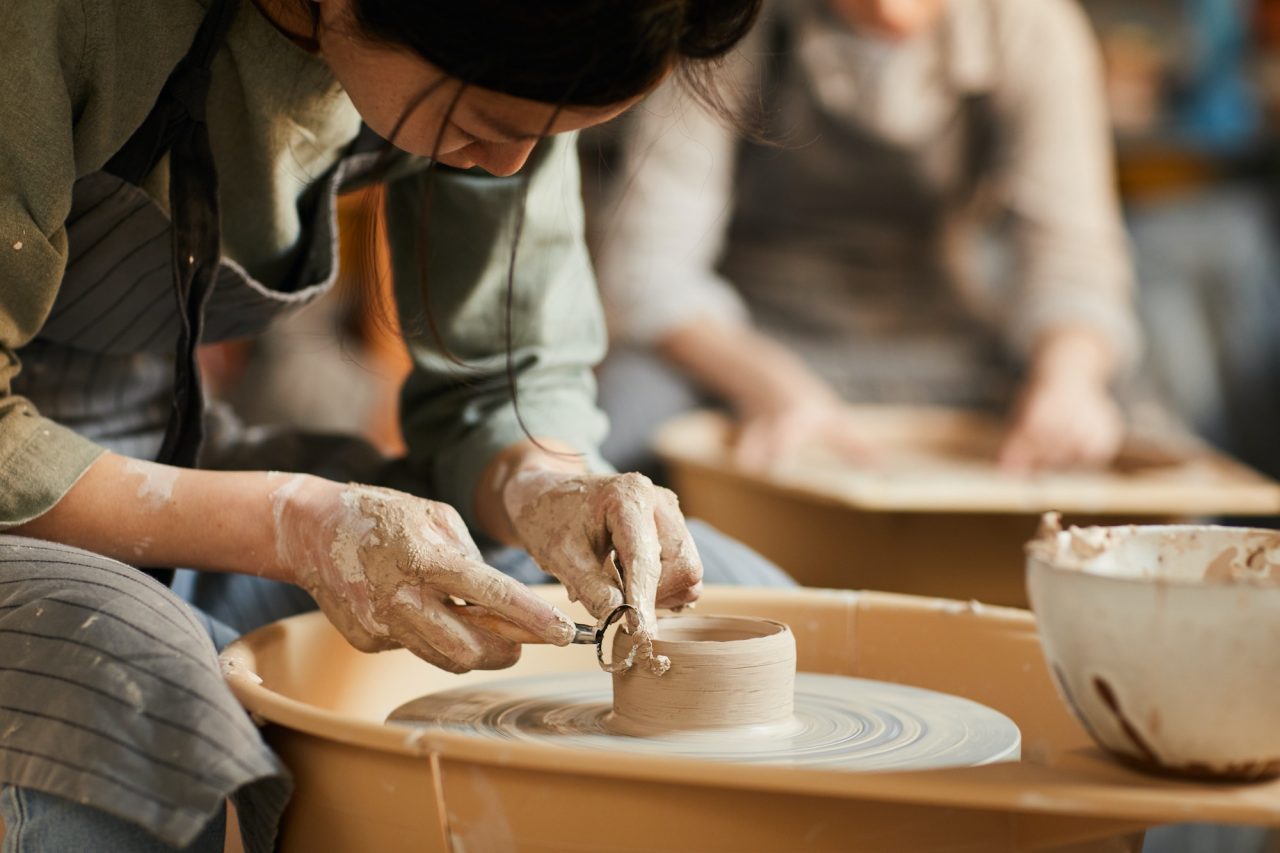
Before beginners touch the clay, a good instructor usually demonstrates the core process. On the wheel, this often means centering, opening, and pulling up the walls. In hand-building, it may mean basic shaping, joining, and surface finishing. Watching first reduces confusion later.
What First-Time Students Usually Feel
Excitement
Clay feels different from most creative materials. It responds instantly to pressure, speed, moisture, and hand position. That immediate feedback is part of what makes pottery so engaging.
Awkwardness at first
The first few minutes often feel clumsy. Hands are not yet coordinated, pressure is uneven, and the material seems to move faster than expected. This is normal. The early awkward stage happens to almost everyone.
Surprise at how physical it is
Many people imagine pottery as a gentle artistic activity only. In reality, it also requires body control, posture, rhythm, and consistent hand pressure. It is creative, but it is also physical.

What You Actually Learn in a First Pottery Class
How clay behaves
Beginners quickly discover that clay is sensitive to force and moisture. Too much pressure can collapse a form. Too little control leads to wobbling. Understanding this behavior is one of the most important early lessons.
Basic forming techniques
Depending on the class, you may learn wheel throwing, hand-building, or both. A first session is not about mastering everything. It is about understanding the basic logic of shaping.
Patience and repetition
Pottery teaches that improvement comes from doing the same motion more than once. Even if your first bowl or cup is uneven, the second and third attempts often feel much better.
What Beginners Usually Get Wrong
They expect perfect results too early
This is the most common mistake. Pottery on social media often looks smooth and effortless. Real beginner pottery does not. Your first piece may lean, thicken, wobble, or collapse—and that is still a successful class if you learned from it.
They use too much force
Beginners often think stronger pressure creates more control. Usually the opposite is true. Good pottery depends more on steady pressure than strong pressure.
They tense up too much
If your shoulders, wrists, and fingers are rigid, the clay often becomes harder to control. Relaxation is part of technique.
What to Wear and Bring
- Comfortable clothes: clay can splash, so avoid anything too delicate
- Short or rolled sleeves: easier for hand movement
- Tied-back hair: helpful for longer sessions
- Minimal accessories: rings, bracelets, and watches can get in the way
In most beginner-friendly studios, you do not need to bring tools. The class usually provides materials and instruction.

How to Prepare Mentally for Your First Pottery Session
The best preparation is not technical. It is mental. Go in expecting to experiment rather than perform. Pottery becomes much more enjoyable when you stop trying to make your first piece look like a finished studio sample. The first class is really about learning how clay moves under your hands and how your own body responds to the process.
It also helps to think of pottery as layered learning. You are not only learning one action. You are learning posture, pressure, moisture control, rhythm, patience, and visual judgment at the same time. That is why even simple progress is meaningful.
Why a First Pottery Class Is Worth It Even If Your Piece Is Imperfect
Many beginners assume the value of the session depends on whether the final bowl or mug looks good. In reality, the value is much broader. You gain direct experience with a real craft, understand why handmade ceramics feel special, and often discover a new hobby or creative outlet. Even if your first piece is uneven, the class can still be one of the most satisfying hands-on experiences you try in Hanoi.
FAQ: First Pottery Class for Beginners
How long does a beginner pottery class usually last?
Most beginner sessions last around 2 to 3 hours, depending on whether the class focuses on wheel throwing, hand-building, or a mix of both.
Do I need experience before joining?
No. Beginner classes are designed for complete first-timers, and instructors usually guide each step closely.
Will I be able to take my pottery home the same day?
Usually not. The piece often needs drying and firing first. Some studios offer pickup later or shipping options for travelers.
Is pottery difficult for beginners?
It can feel challenging at first, especially on the wheel, but that difficulty is part of what makes it rewarding. A good class keeps the process enjoyable even when the first attempts are imperfect.
Final Thoughts
Your first pottery class is not supposed to prove talent. It is supposed to open the door. You learn how clay behaves, how your hands respond, and why pottery is both more difficult and more satisfying than it looks from the outside.
If you want a beginner-friendly experience that feels creative, memorable, and genuinely hands-on, start with a pottery class at Baceraclass. The goal is not perfection on day one. The goal is to begin well.